Membership
Meet a Member
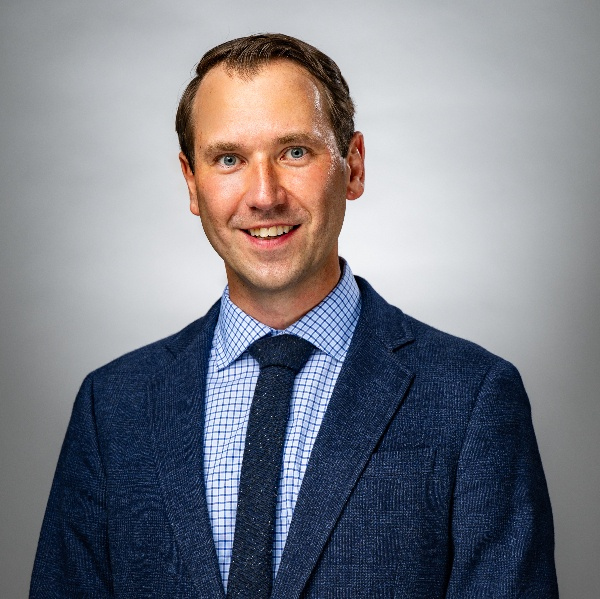
Paul Wolujewicz
Assistant Professor of Biomedical Sciences, Quinnipiac University
Adjunct Assistant Professor of Neuroscience, Weill Cornell Medicine
What is your area of expertise and current research focus?
My expertise lies at the interface of computational genomics and developmental neurobiology. My group leverages whole-genome sequencing, multi-omic integration, and advanced analytic tools to uncover the genetic and molecular mechanisms underlying neural tube defects and related neurodevelopmental disorders. In parallel, my lab has developed a complementary program in public health genomics focused on metagenomic surveillance of vector-borne diseases using long-read sequencing. Across both areas, our long-term goal is to translate genomic data into actionable insights that improve prediction, prevention, and clinical management of complex conditions.
What do you consider to be your most influential or significant career achievement or milestone, and why?
One of the most meaningful milestones in my career has been building a research program that meaningfully involves and elevates students. Receiving our medical school's Outstanding Mentor Award in research this year was particularly significant because it reflects the long-term investment I place in developing future scientists and physician-scientists.
Scientifically, an exciting opportunity I'm currently pursuing is establishing a spina bifida genomics and DNA biorepository effort in collaboration with Connecticut Children's Hospital. This initiative will allow us to pair trio-based genome sequencing with detailed exposure histories and clinical phenotyping, an approach and design that I believe and hope might yield transformative discoveries. While this work is still in its early phases, it represents the kind of translational framework I hope to contribute to the birth defects field.
Why did you choose birth defects as your major research interest?
My interest in birth defects began during my doctoral training when I was introduced to the extraordinary complexity of neural tube closure and the striking gaps in our understanding of its failure. Neural tube defects sit at the interface of genetics, environment, metabolism, and maternal-fetal health. Yet despite decades of research, we still cannot fully predict risk or understand why folic acid-resistant cases occur.
The scientific challenge, the translational urgency, and the population-level implications all drew me in. I am motivated by the idea that integrative genomics, systems biology, and deeper community-level research can ultimately reduce the burden of these conditions and inform more personalized preventive strategies.
What led you to join BDRP, and what will it mean to be involved in BDRP?
My introduction to BDRP came through the opportunity to chair a minicourse on “AI in Genomics” at the 2025 Annual Meeting in Denver. Spending the week immersed in the BDRP community made a strong impression. I find that the Society uniquely brings together basic scientists, clinicians, epidemiologists, toxicologists, and public health experts who care deeply about congenital disorders.
Becoming involved with BDRP represents an opportunity to contribute to a genuinely interdisciplinary community where rigorous science and real-world impact go hand-in-hand. I see BDRP as a home for my work and also as a place where collaborative partnerships can form organically.
What do you hope to give to and receive from the BDRP community?
I hope to contribute computational genomics expertise, new analytical approaches, and collaborative energy to ongoing questions in birth defects research. My lab's work ranging from genome interpretation frameworks to multi-omic modeling may complement existing efforts in understanding complex etiologies, gene-environment interactions, and folate-resistant NTDs.
In return, I hope to learn from the diverse perspectives represented within BDRP. The Society's strengths in developmental toxicology, epidemiology, and translational research offer insights that can greatly enhance our own projects. Ultimately, I hope to form partnerships that accelerate progress and broaden the impact of our collective work.
In your free time, what are your hobbies, interests, or fun ways to relax?
Most of my time outside the university is spent with my wife and our two young sons, who make every day lively and full of curiosity. Family activities, sports, and weekend adventures tend to fill our schedule, but I also enjoy finding quieter moments to read, play music, and experiment (and try to keep up) with emerging AI tools in coding. Those hobbies help me recharge and often spark new ideas for the lab.